Vegetable Lo Mein
INTRODUCTION
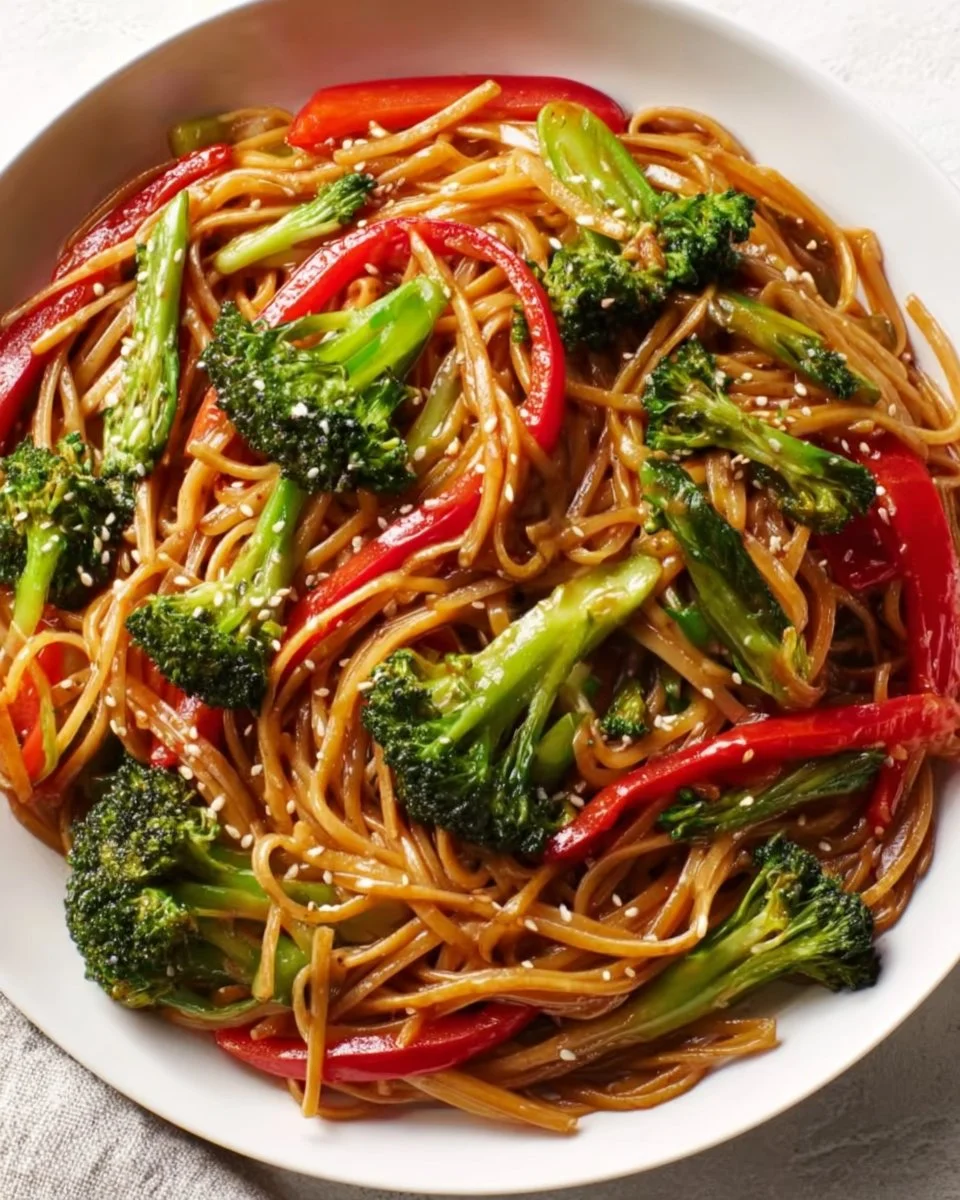
Vegetable Lo Mein is a quick noodle dish with bright vegetables and a simple sauce. You will use common pantry items and fresh veggies. The meal cooks fast and fills the whole kitchen with a warm, savory smell. This recipe works for a weeknight dinner or a fast lunch. If you like meat with your noodles, see a simple chicken lo mein recipe to try another version.
This dish balances soft noodles with crunchy vegetables. It uses soy sauce, brown sugar, and sesame oil to make a sauce that coats every bite. You can change the vegetables based on what you have. The steps are clear and short. You do not need fancy tools or rare ingredients.
WHY YOU WILL LOVE THIS RECIPE
You will love this Vegetable Lo Mein because it cooks fast, tastes fresh, and feeds many people. The sauce is sweet and salty in a small, balanced way. The noodles soak up flavor and the vegetables give color and texture. You can make this for family dinners, meal prep, or when you need a hearty, low-effort meal.
This recipe also fits many diets with small changes. It is easy to add tofu or shrimp for more protein. You can switch the sugar and use a sugar substitute if you prefer less sugar. For ideas on hearty plates and meal plans, check these high protein lunch ideas to mix with your lo mein.
HOW TO MAKE Vegetable Lo Mein
This recipe follows simple steps. You cook the noodles, stir-fry the vegetables, and toss everything with the sauce. Work in stages so each vegetable keeps its color and texture. Use hot oil and a hot pan to get a light char on the carrots and peppers. When you add the sauce, let it cook a few minutes so it thickens and sticks to the noodles.
If you want a more balanced plate, you can pair it with light salads or steamed greens. You can also change the noodle type if you prefer wheat, rice, or gluten-free noodles. For ideas to serve with hearty sides, look through this list of healthy high protein lunch recipes that complement this dish.
EQUIPMENT NEEDED
- Large skillet or wok
- Large pot for boiling noodles
- Strainer or colander
- Mixing bowls
- Tongs or wooden spoons
- Measuring cups and spoons
- Knife and cutting board
These tools help you move food quickly from pot to pan. A wok gives the best high-heat results, but a large skillet works well too. Use a wide, flat tool to toss noodles without breaking them.
Ingredients You’ll Need :
- 1/2 cup vegetable broth (low-sodium)
- 3 tablespoons soy sauce
- 2 tablespoons brown sugar
- 1 tablespoon sesame oil
- 8 oz lo mein noodles
- 2 medium carrots, julienned
- 2 cups broccoli florets
- 1 red bell pepper, sliced
- 1 medium onion, sliced
- 3 cloves garlic, pressed or minced
- 3-4 tablespoons vegetable or canola oil for cooking
These items are easy to find at any grocery store. If you do not have lo mein noodles, you can use spaghetti or egg noodles instead. Use low-sodium broth and soy sauce if you want less salt.
STEP-BY-STEP INSTRUCTIONS :
- Whisk together vegetable broth, soy sauce, brown sugar, and sesame oil in a small bowl until sugar dissolves completely. Set aside.
- Cook lo mein noodles according to package directions until al dente. Drain and set aside.
- Heat 1 tablespoon oil in a large skillet over medium-high heat.
- Cook carrots for 3-4 minutes, stirring occasionally, until golden-brown. Remove to a plate.
- Add another tablespoon of oil and cook onions for 3 minutes until translucent with browned edges. Remove and set aside with carrots.
- Add more oil and cook broccoli for 3 minutes until bright green and crisp-tender. Remove to the plate.
- Cook bell peppers for 2-3 minutes until slightly charred but still crunchy. Remove to the plate.
- Add all cooked vegetables back to the skillet.
- Press garlic directly into the pan and toss everything together for 30 seconds until fragrant.
- Add cooked noodles and pour sauce over everything.
- Using tongs or wooden spoons, toss everything together for 3-5 minutes until noodles and vegetables are coated and sauce thickens slightly.
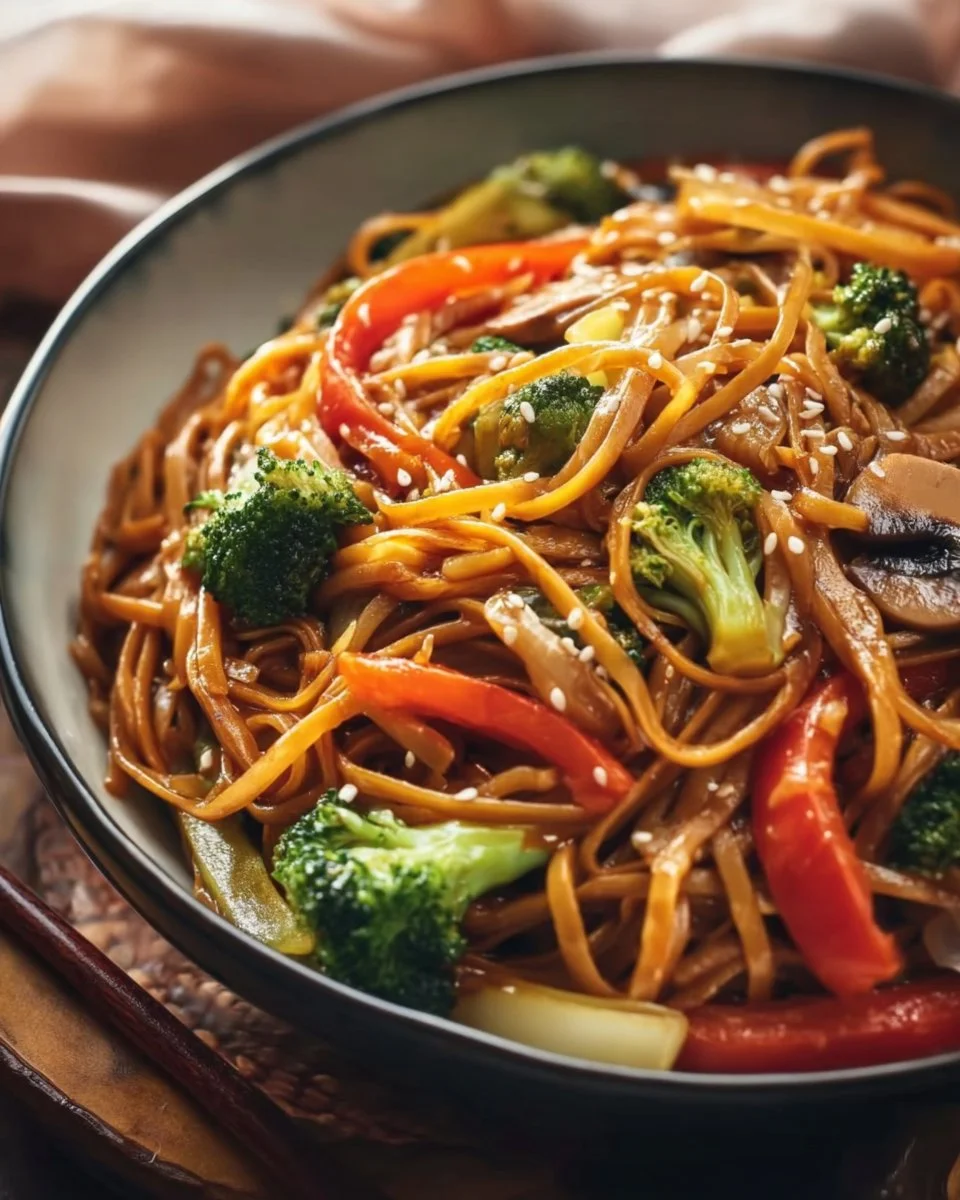
Follow these steps in order and the dish will come out well. Keep the pan hot and do not crowd the vegetables. Toss gently so the noodles do not break. Check the seasoning at the end and add a little more soy sauce or broth if needed.
HOW TO SERVE Vegetable Lo Mein
Serve Vegetable Lo Mein hot, right after you finish cooking. Use a wide plate or a shallow bowl so the noodles spread out and cool a little. You can top with toasted sesame seeds, thin sliced green onions, or a splash of extra sesame oil for more aroma.
If you want a fuller meal, serve this with a light protein or steamed greens. To match a low-carb protein side or lean additions, see these low-carb high-protein lunch ideas for good pairings.
STORAGE & FREEZING : Vegetable Lo Mein
Store leftovers in an airtight container in the fridge for up to 3 days. The noodles soak up more sauce over time and the texture will change, but it still tastes good. To reheat, place the lo mein in a skillet with a splash of water or broth and warm over medium heat, tossing until hot.
Freezing is not ideal for noodle texture, but you can freeze if needed. Cool completely, place in freezer-safe containers, and freeze for up to 1 month. Thaw in the fridge overnight, then reheat gently in a pan with a little oil or broth.
SERVING SUGGESTIONS
- Top with sliced green onion and sesame seeds for a simple finish.
- Add crushed red pepper or sriracha for a spicy kick.
- Serve with a light soup or simple salad on the side.
- For a grain side, try serving one of these tasty Autumn Glow Quinoa Bowls to mix textures and flavors.
These small touches make the meal feel larger and more balanced. Keep sides light so the noodles stay the main part of the plate.
VARIATIONS
- Add protein: Stir in cubed tofu, shrimp, or thinly sliced chicken. Cook these first, then remove and add back at the end.
- Change the sauce: Use hoisin sauce or oyster sauce in place of some soy sauce for a sweeter flavor.
- Make it spicy: Add chili paste, red pepper flakes, or a dash of hot sauce.
- Use different vegetables: Snow peas, baby corn, mushrooms, or bok choy work well.
- Gluten-free: Use rice noodles and a gluten-free soy sauce or tamari.
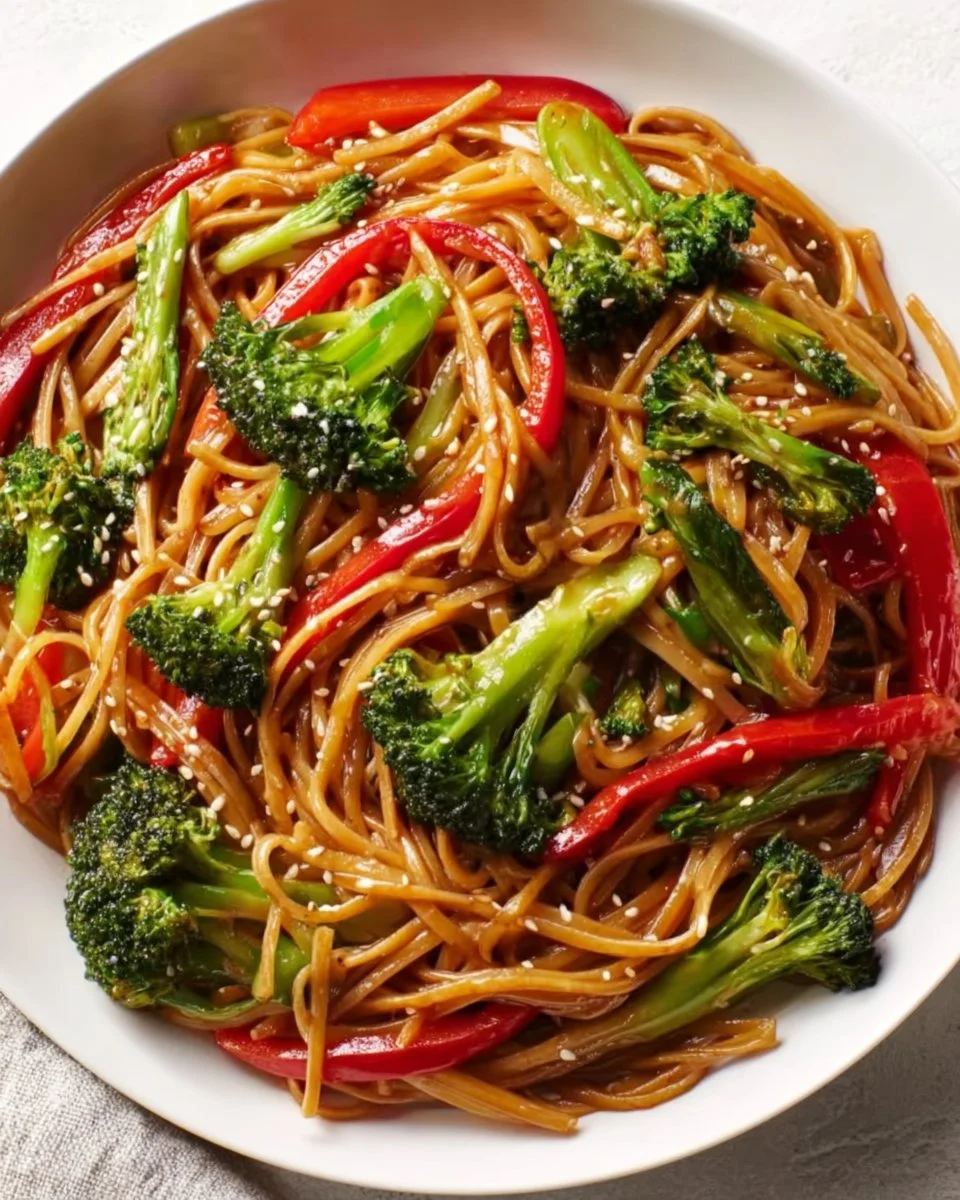
Each change keeps the basic method the same. Swap ingredients based on taste, time, and what you have on hand.
FAQs
Q: Can I use frozen vegetables?
A: Yes. Use thawed vegetables and pat them dry. Cook a little longer so they lose extra water and keep texture.
Q: How do I stop the noodles from sticking?
A: Toss the drained noodles with a small spoon of oil and do not overcook. Add them to a very hot pan and toss quickly.
Q: Can I make lo mein without oil?
A: You can use a little broth to stir-fry instead of oil, but the texture and flavor will change. Oil helps to get browning and seal in flavor.
Q: Is this recipe vegan?
A: Yes, this vegetable version is vegan if you use vegan noodles and soy sauce. Swap brown sugar for a vegan sweetener if needed.
Q: Can I double the recipe?
A: Yes. Use a very large skillet or a wok. Cook in batches so the vegetables do not steam and become soft.
MAKE-AHEAD TIPS FOR Vegetable Lo Mein
- Prep the vegetables: Cut all vegetables and store them in the fridge in separate containers one day ahead.
- Mix the sauce: Whisk the sauce and keep it in a covered jar in the fridge. Shake before use.
- Cook noodles early: Cook and drain the noodles, toss with a little oil, and store in the fridge for up to a day. Reheat gently in the pan with a splash of broth.
These steps save time on the day you want to cook. Do not combine everything until you heat and toss it all together.
Conclusion
Vegetable Lo Mein is simple, fast, and flexible. You can use common vegetables, make a quick sauce, and finish in minutes. This dish works for busy nights, meal prep, or when you want a warm, tasty bowl without much fuss. For a fast video guide and another simple veggie lo mein version, try this helpful page on Veggie Lo Mein + Video (Under 30 Minutes) – Momsdish.

Vegetable Lo Mein
Ingredients
Method
- Whisk together vegetable broth, soy sauce, brown sugar, and sesame oil in a small bowl until sugar dissolves completely. Set aside.
- Cook lo mein noodles according to package directions until al dente. Drain and set aside.
- Heat 1 tablespoon oil in a large skillet over medium-high heat.
- Cook carrots for 3-4 minutes, stirring occasionally, until golden-brown. Remove to a plate.
- Add another tablespoon of oil and cook onions for 3 minutes until translucent with browned edges. Remove and set aside with carrots.
- Add more oil and cook broccoli for 3 minutes until bright green and crisp-tender. Remove to the plate.
- Cook bell peppers for 2-3 minutes until slightly charred but still crunchy. Remove to the plate.
- Add all cooked vegetables back to the skillet.
- Press garlic directly into the pan and toss everything together for 30 seconds until fragrant.
- Add cooked noodles and pour sauce over everything.
- Using tongs or wooden spoons, toss everything together for 3-5 minutes until noodles and vegetables are coated and sauce thickens slightly.